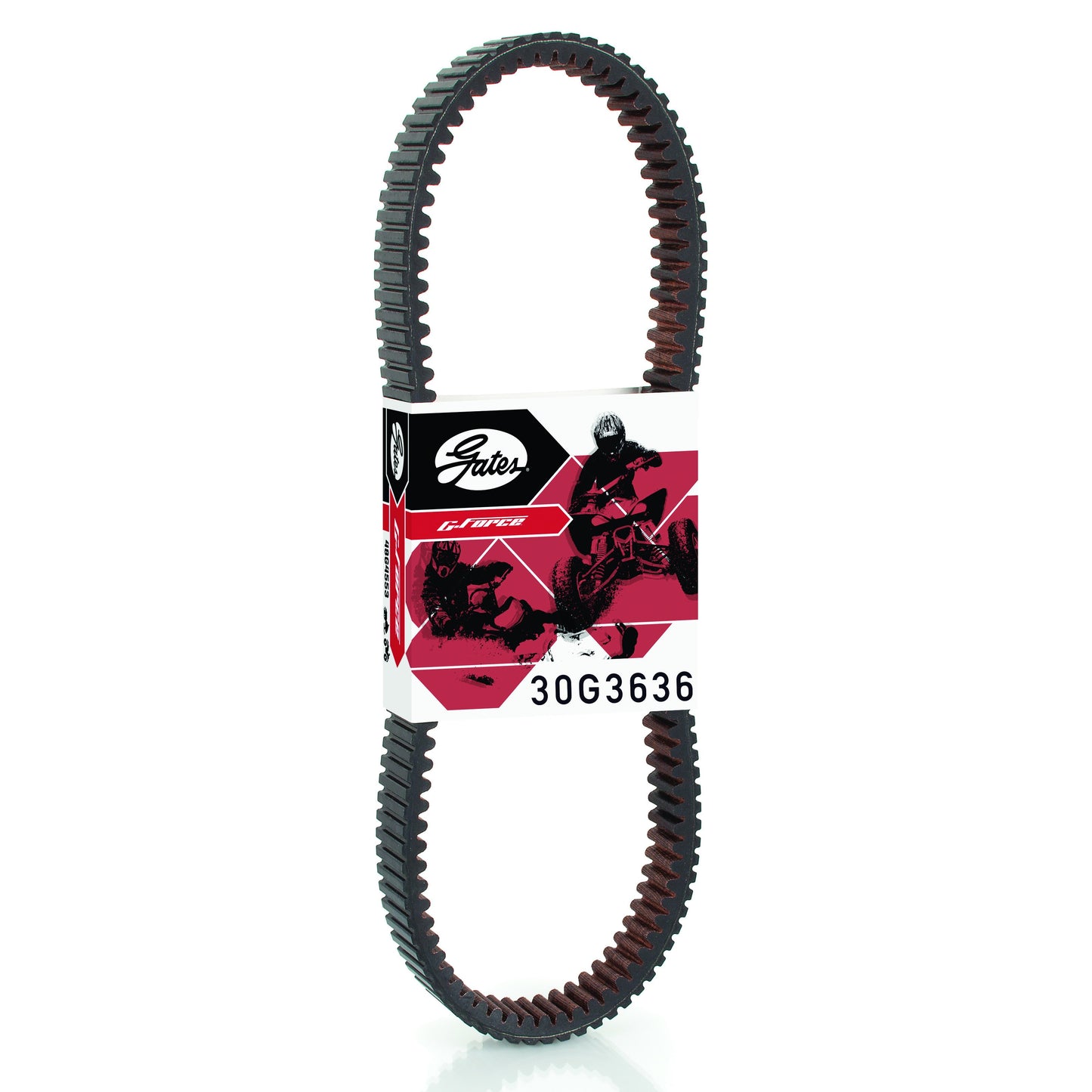
CVT Drive Belt for Can-Am Quest 500, Quest 650 & Traxter 2002-2005
CVT Drive Belt for Can-Am Quest 500, Quest 650 & Traxter 2002-2005
SKU:225.30G3636
Free shipping over £150. Terms apply
Couldn't load pickup availability
CVT Drive Belt for Can-Am Quest 500, Quest 650 & Traxter 2002-2005
Fits Bombardier/Can-Am Quest 500, Quest 650, Quest 650 XT, Quest MAX 650, Traxter MAX 500 & Traxter MAX 650 (2002-2005)
This Gates CVT drive belt is a direct replacement for the belt fitted to the Bombardier/Can-Am Quest and Traxter model range, built to OEM dimensions for a fit-and-function match.
It uses a fabric-faced underside and a 28-degree double-notch profile, matching the original top width, circumference and thickness of the factory belt.
Key Features
- Direct OEM fit and function replacement
- Double-notch design (28°) for efficient power transfer
- Fabric bottom construction
- Outside circumference 953mm
Technical Specs
| Specification | Detail |
|---|---|
| Top Width | 33mm (1.28in) |
| Outside Circumference | 953mm (37.50in) |
| Pitch Length | 923mm (36.36in) |
| Pitch Width | 30.80mm (1.21in) |
| Thickness | 14.40mm (0.57in) |
| Angle | 28° |
| Double Notch | Yes |
| Material | Fabric bottom |
Vehicle Fitment Guide
| Make & Model | Years |
|---|---|
| Can-Am Quest 500 | 2002-2003 |
| Can-Am Quest 650 | 2002-2004 |
| Can-Am Quest 650 XT | 2002-2004 |
| Can-Am Quest MAX 650 | 2004 |
| Can-Am Traxter 650 Auto CVT | 2005 |
| Can-Am Traxter MAX 500 | 2005 |
| Can-Am Traxter MAX 650 Auto CVT | 2005 |
OEM Part Number Cross Reference
Aftermarket replacement. OEM part numbers are listed for reference only.
| Part Number | Manufacturer / Brand |
|---|---|
| 420280200 | Can-Am |
| 715900023 | Can-Am |
Frequently Asked Questions
Will this belt fit my Can-Am/Bombardier Quest or Traxter without modification?
Yes. This belt is manufactured to the same dimensions as the original Can-Am 420280200 / 715900023 belt, so it fits and functions as a direct replacement.
What's included?
One Gates CVT drive belt, ready to fit.
How do I know my old belt needs replacing?
Common signs include a burning rubber smell, visible cracking or glazing on the belt surface, a slipping or bogging sensation under load, and reduced top speed.
Why does the belt have a double-notch design?
The notches allow the belt to flex more efficiently around the pulleys, reducing heat build-up and extending service life compared with a plain-sided belt.
Share