This red machined aluminium MOSFET bypass voltage regulator is a substantial upgrade in heat dissipation for any powersports charging system. After ten minutes of use the billet aluminium heatsink runs around 33 per cent cooler than a standard cast regulator housing, which directly addresses the heat build-up that destroys most regulators.
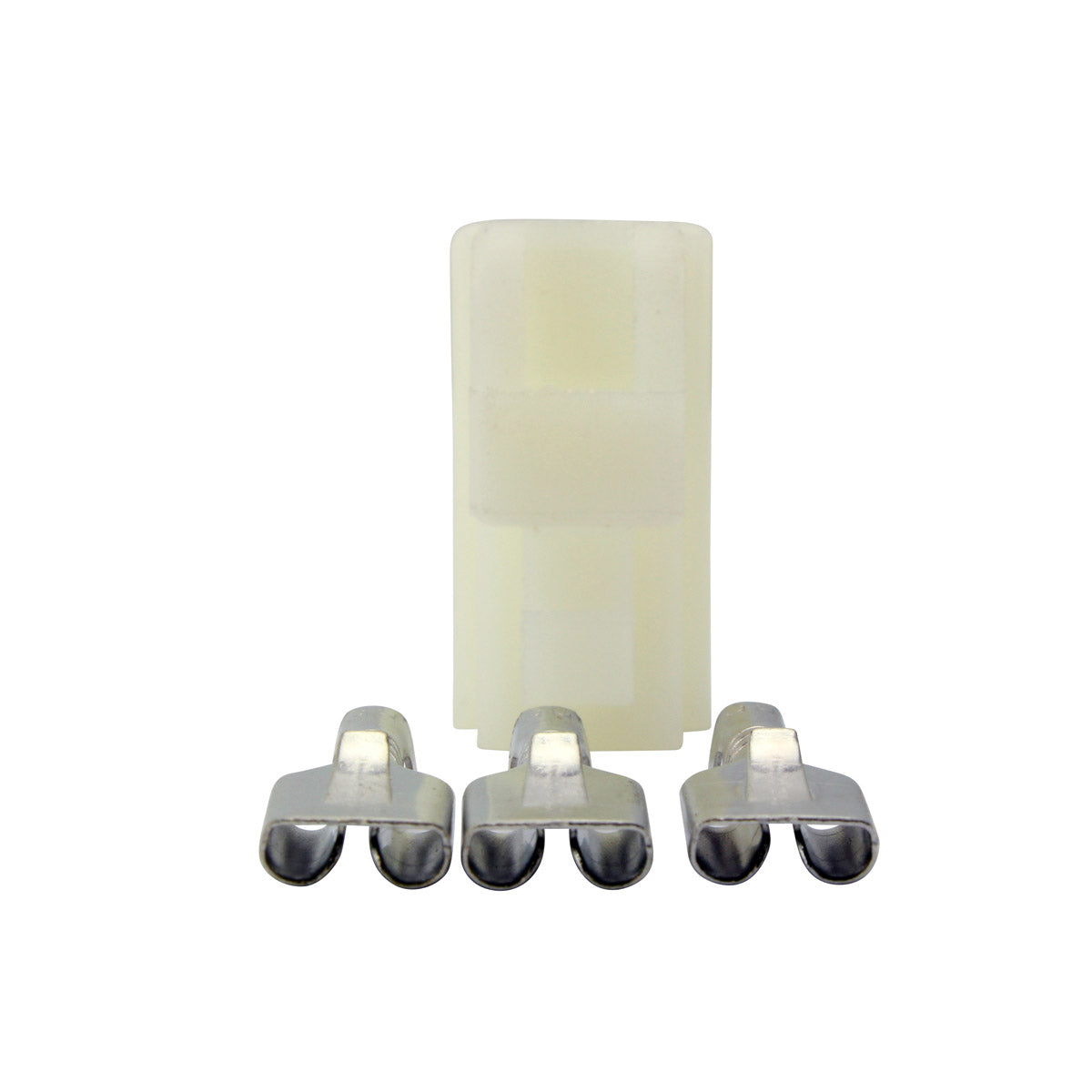
Combined with the renowned MOSFET regulation technology, it is an added value upgrade for any three-phase permanent magnet charging system. It runs cooler than all OEM diode style regulators and includes overheat protection, so rather than burning up it simply switches off temporarily to cool. Installation is direct replacement, plug and play and straightforward. The quality exceeds OEM equipment, with an improved heat sink, better charging capability and higher grade electrical components. The opposite connector for the main harness side is included, because that connector is so frequently melted, corroded or defective and is a major cause of repeat electrical faults.
Key Features
- Red machined billet aluminium heatsink housing
- Runs about 33 per cent cooler than a standard cast housing after ten minutes of use
- MOSFET regulation for three-phase permanent magnet charging systems
- Overheat protection switches the unit off to cool rather than burn out
- Bypass harness supplied with 811 mm and 350 mm wire lengths
- Opposite main harness side connector included, with ring terminals for the battery
- 50 A / 500 W maximum charging capacity
Technical Specs
| Specification |
Detail |
| Width |
95 mm |
| Length |
90 mm |
| Height |
30 mm |
| Fixation holes, centre to centre |
75 mm |
| Wire length, first |
811 mm |
| Wire length, second |
350 mm |
| Number of plugs |
2 |
| Number of pins |
5 |
| Number of wires |
5 |
| Minimum charging voltage |
14.5 V +/- 0.5 V |
| Maximum charging current |
50 A |
| Maximum power output |
500 W |
| Open circuit voltage |
Less than 15 V |
| Operating temperature |
-20 C to 85 C |
Vehicle Fitment Guide
| Make & Model |
Years |
| Suzuki GSXR 600 |
1996-2020 |
| Suzuki GSXR 750 |
1996-2020 |
| Triumph Daytona 675 |
1996-2020 |
| Triumph Street Triple 675 |
1996-2020 |
OEM Part Number Cross Reference
Aftermarket replacement. OEM part numbers are listed for reference only.
| Part Number |
Manufacturer / Brand |
| 32800-47H00 |
Suzuki |
| 32800-47H10 |
Suzuki |
| 32800-47H30 |
Suzuki |
| 32800-41G00 |
Suzuki |
| 32800-41G10 |
Suzuki |
| 32800-41F10 |
Suzuki |
| 32800-41F11 |
Suzuki |
| 32800-44D11 |
Suzuki |
| 32800-33E00 |
Suzuki |
| 32800-18H00 |
Suzuki |
| T1301234 |
Triumph |
| T1300823 |
Triumph |
Frequently Asked Questions
Do I need to modify the bike to fit it?
No. It is a direct replacement that installs plug and play using the supplied bypass harness. Check the 75 mm fixation hole spacing and the 95 mm by 90 mm by 30 mm body against your original mounting position before ordering.
What comes in the box?
The red machined aluminium MOSFET bypass regulator, the bypass harness with 811 mm and 350 mm wire lengths, and the opposite main harness side connector for the battery connection with ring terminals.
How do I know the old regulator has failed?
With the engine running, the battery should see at least 14.5 V and never exceed the 15 V open circuit limit. A reading that stays flat, a battery that will not hold charge, or a regulator body that is painfully hot along with melted connector pins all point to a failed unit.
What does the bypass wiring actually do?
The supplied harness runs the charging current directly between the regulator and the battery rather than through the ageing original loom and its connectors, which is where voltage drop and connector heat damage usually build up on these machines.
Dispatched from the UK · 12-month warranty · Fitment support from our technical team