Voltage Regulator for Kawasaki Ninja ZX-7, Suzuki GSX, Triumph & Yamaha FZR 1984-2013
Voltage Regulator for Kawasaki Ninja ZX-7, Suzuki GSX, Triumph & Yamaha FZR 1984-2013
SKU:RM31000
Free shipping over £150. Terms apply
Couldn't load pickup availability
Nippon Denso Voltage Regulator - RM31000
Kawasaki Ninja ZX-7, Suzuki GSX, Triumph Daytona 1200 and Yamaha FZR - 1984-2013
The RM31000 is an advanced voltage regulator built for Nippon Denso alternator charging systems. It uses a modern IC chip to control the alternator field coil, which delivers improved charging voltage and better battery longevity than the original equipment control. Where an ageing regulator drifts, overcharges or drops out under load, this unit holds a minimum charging voltage of 14.5 V +/- 0.5 V and keeps the open circuit voltage below 15 V, so the battery sees a steady, correct charge across the rev range.
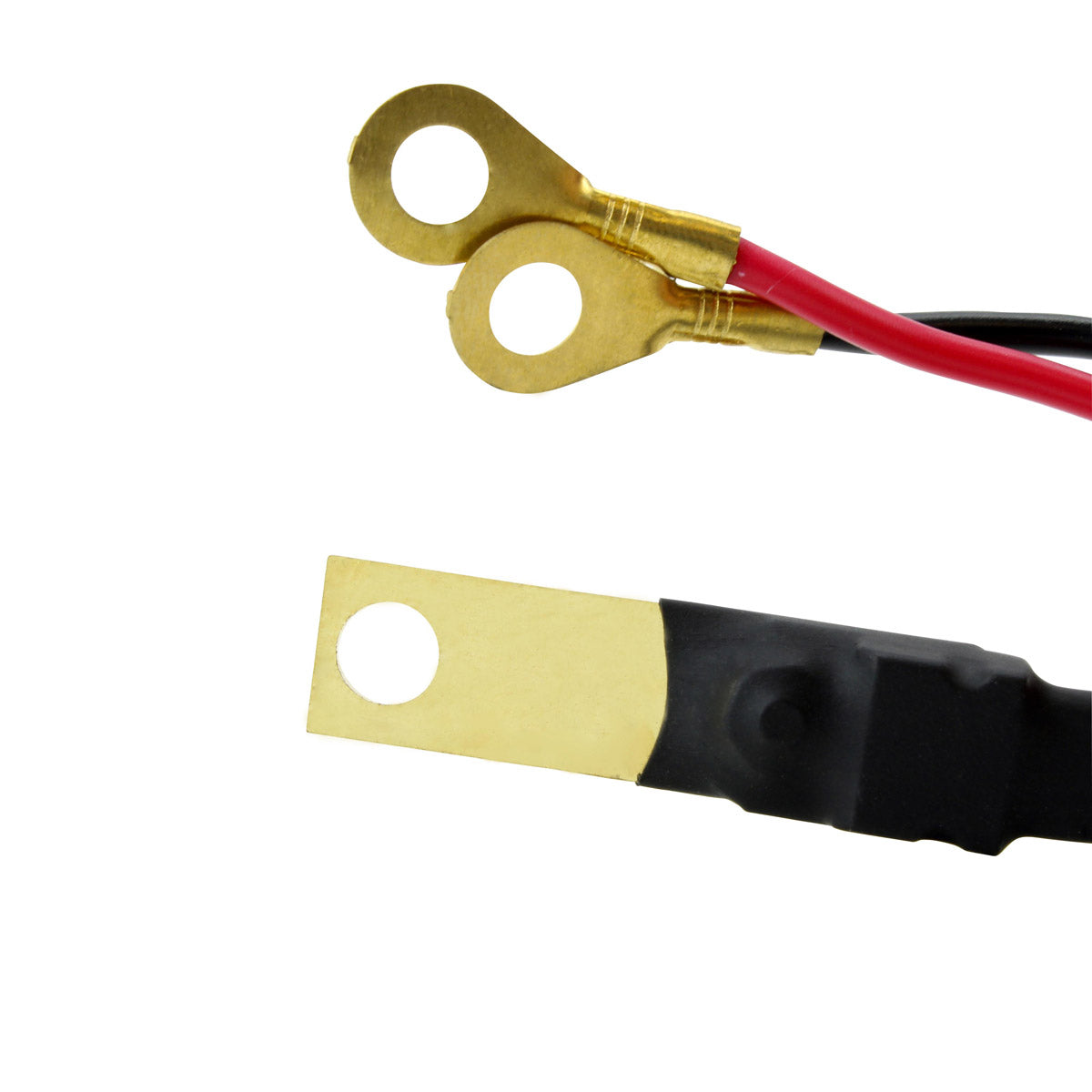
Protection is built in. The regulator has precise voltage regulation, short circuit protection, reverse battery protection and a thermal safety shutdown that takes the unit offline before the alternator can be damaged. Heat sinking is superior to the original equipment part and thermal overload protection is included as standard, which addresses the single most common cause of regulator failure. Fitting is a straightforward 2-wire installation on 140 mm leads, with no need to cut into the main loom.
Key Features
- Modern IC chip controls the alternator field coil
- Precise voltage regulation for improved battery longevity
- Short circuit protection
- Reverse battery protection
- Thermal safety shutdown protects the alternator
- Superior heat sinking compared with the original equipment regulator
- Thermal overload protection
- Easy 2-wire installation
Technical Specs
| Specification | Detail |
|---|---|
| Part number | RM31000 |
| Type | Voltage regulator for Nippon Denso alternators |
| Length | 77 mm |
| Wire length | 140 mm |
| Number of pins | 2 |
| Number of wires | 2 |
| Minimum charging voltage | 14.5 V +/- 0.5 V |
| Maximum charging current | 50 A / 500 W |
| Open circuit voltage | Less than 15 V |
| Operating temperature | -20 C to 85 C |
Vehicle Fitment Guide
Years shown are the overall coverage span for this part. Please confirm against the OEM part number on your original unit before ordering.
| Make & Model | Years |
|---|---|
| Kawasaki Ninja ZX-7 | 1984-2013 |
| Suzuki GSX | 1984-2013 |
| Triumph Daytona 1200 | 1984-2013 |
| Yamaha FZR | 1984-2013 |
OEM Part Number Cross Reference
Aftermarket replacement. OEM part numbers are listed for reference only.
| Part Number | Manufacturer / Brand |
|---|---|
| 21066-1056 | Kawasaki |
| 21066-1062 | Kawasaki |
| 21066-1076 | Kawasaki |
| 32500-03F00 | Suzuki |
| 32500-03F10 | Suzuki |
| 32500-03F11 | Suzuki |
| 32500-27A00 | Suzuki |
| 36Y-81970-50-00 | Yamaha |
| 4BH-81970-00-00 | Yamaha |
| T1300016 | Triumph |
Frequently Asked Questions
Will this fit without modification?
Yes. The RM31000 is designed for Nippon Denso alternator systems and goes on with an easy 2-wire installation using the 140 mm leads, so there is no need to cut or splice into the main harness. Please confirm the OEM number on your original unit against the cross reference table above before ordering.
What is included?
The regulator is supplied with mounting hardware and the wiring needed for the 2-wire installation.
How can I tell my old regulator has failed?
Common signs are a battery that will not hold charge, a charging voltage at the battery terminals that sits well below or well above 14.5 V, lights that dim or flare as the revs rise, and a regulator body that runs extremely hot. A reading above 15 V open circuit indicates the unit is no longer controlling the alternator field coil correctly.
How does it differ from the original part?
The original equipment regulators use older control electronics and a smaller heat sink. This unit regulates the field coil with a modern IC chip, has superior heat sinking, and adds short circuit protection, reverse battery protection and a thermal safety shutdown, so it is far less likely to be destroyed by heat than the part it replaces.
Share